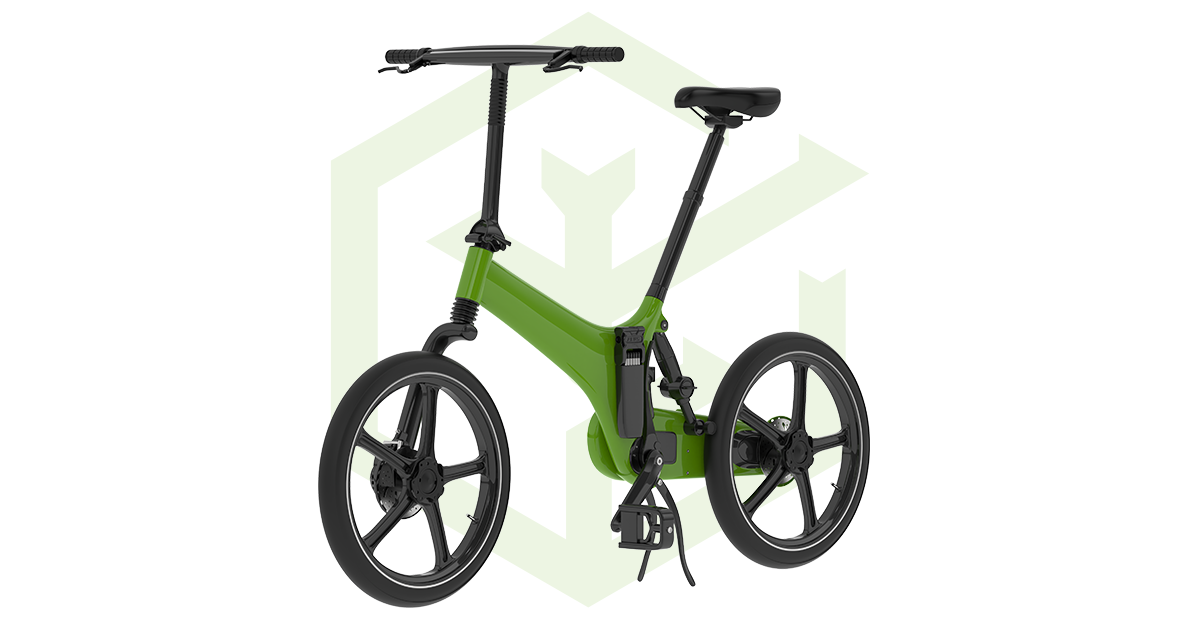
Shipping E-Bikes & Electric Vehicles Internationally
Restricted Items Guide
E-bikes, e-scooters, hoverboards, and electric ride-ons can be shipped internationally. However, since they contain lithium batteries, they fall under Dangerous Goods regulations that affect how they are classified, packaged, and shipped. forward2me ships electric personal vehicles from our UK, Germany, and US warehouses, with courier options for both standard and Dangerous Goods shipments.
Before you order, this guide walks you through battery classifications, documentation, costs, and courier options so there are no surprises when your shipment arrives at our warehouse. For standalone replacement batteries over 100 Wh, see our large batteries shipping guide.
 United Kingdom
 United States
 Germany
 Japan
Japan
Can forward2me Ship E-bikes and Electric Vehicles?
Overview
We ship e-bikes, e-scooters, hoverboards, and similar electric personal vehicles from our UK, Germany, and US warehouses. We're also working to confirm e-bike shipping from Japan. Because these products contain lithium batteries, they are subject to international dangerous goods regulations that affect how they are classified, packaged, and shipped.
The key variable is the battery: whether it is installed in the bike or separate, and whether it exceeds 100 Wh (watt-hours). These two factors determine which rules apply, which couriers can carry the shipment, and what additional fees are involved.
 Get a shipping estimate before you order
Electric Vehicles We Can Ship
What We Ship
We ship a range of electric personal vehicles, subject to the battery regulations outlined above.
 E-bikes – Including pedal-assist and throttle-controlled bikes. Battery must be declared with Wh rating and MSDS/SDS provided.
.png) E-scooters – Electric kick scooters with lithium batteries. Same battery classification rules apply.
E-scooters – Electric kick scooters with lithium batteries. Same battery classification rules apply.
 Hoverboards & electric skateboards – Subject to battery Wh classification. Retailer packaging is rarely sufficient — repacking is standard.
 Electric ride-on children's vehicles – Battery classification rules apply. Confirm Wh rating before ordering.
 Standalone replacement batteries – Accepted but classified as Dangerous Goods if over 100 Wh. Full DG packaging, documentation, and surcharges apply. Contact us before ordering.
How Lithium Batteries Are Classified for Shipping
Regulations
International air (IATA) and road (ADR) regulations classify lithium batteries by watt-hour (Wh) rating and whether they are installed in the device or shipped separately. Your battery's Wh rating is usually printed on the battery itself or listed in the product specification.
Up to 100 Wh
Standard – fewer restrictions
Most e-bikes and e-scooters in this range ship with fewer restrictions. Standard courier services apply in most cases.
Over 100 Wh – installed in bike
Accepted with correct declaration
E-bikes with batteries over 100 Wh installed are accepted. The battery is necessary for the equipment to function. Classified as UN3171 or UN3556. Must be declared and packed per IATA rules.
Over 100 Wh – loose/standalone
Dangerous Goods – strict requirements
Standalone batteries over 100 Wh are classified as Dangerous Goods (UN3480 for lithium-ion, UN3090 for lithium metal). Specialist packaging, documentation, and surcharges apply.
Weight and Size Limits
Shipping restrictions
There's no fixed weight limit for e-bikes shipped under UN3556 — the limiting factor is each courier's standard maximum package dimensions and weight. If your e-bike exceeds courier limits, it will need to ship via freight instead. Limits vary by courier and destination, so check with us before ordering if your e-bike is unusually large or heavy.
Battery Installed vs. Battery Separate – What Changes
Shipping scenarios
How you ship your e-bike makes a significant practical difference. Here's a side-by-side comparison of what each scenario involves.
Battery installed in the e-bike
- Classified as UN3171 or UN3556
- No UN specification packaging required — strong rigid box is sufficient
- Can travel by air or road
- Road transport under ADR SP666 — waybill must state "Not restricted as per ADR SP666"
- MSDS/SDS document required to verify battery type and confirm UN3171 classification applies
- Generally lower additional cost
Standalone / loose battery
- Classified as UN3480 (lithium-ion) or UN3090 (lithium metal)
- Must be packed in a certified UN specification box
- Dangerous Goods surcharges apply
- From Germany: air via FedEx International Priority; EU road via FedEx Regional Economy only
- From UK: FedEx only — DHL does not accept batteries over 100 Wh
- FedEx Regional Economy road not available to Croatia from Germany
- All fees must be agreed before we proceed
 Our recommendation: ship with the battery installed where possible
Shipping the battery inside the e-bike is simpler, cheaper, and supported by more couriers. Loose batteries attract significant surcharges and have more limited routing options.
What Type of E-bike Do You Have?
Classification
Not all e-bikes are the same – and the type you own determines which regulations apply in your destination country, and in some cases which couriers can carry your shipment.
- Pedelec / EPAC (Standard e-bike) – The most common type. Motor assistance cuts off at 25 km/h, maximum continuous power 250W, pedal assist only. Treated as a standard bicycle across the EU and UK – no insurance, registration, or licence required.
- S-Pedelec (Speed pedelec) – Pedal assist up to 45 km/h, higher motor power. Treated as a motor vehicle in most EU countries — requires registration, insurance, a licence plate, and in Germany, a helmet. Cannot use cycle paths.
- Throttle e-bike – Motor can be activated without pedalling. Legal in the US (Class 2) but not permitted as a standard bicycle in the EU or UK, where throttle models are typically reclassified as motor vehicles.
- US Class System (Class 1, 2, 3) – Class 1: pedal assist up to 20 mph. Class 2: throttle-assisted up to 20 mph. Class 3: pedal assist up to 28 mph. Within legal class limits, e-bikes are generally treated as bicycles.
This is about road legality, not shippabilityThis classification affects whether your e-bike is street-legal at your destination – it's separate from whether forward2me can ship it. We're not aware of any shipping restrictions specific to S-Pedelecs or throttle e-bikes; check your destination country's rules to confirm road legality once your e-bike arrives.
What Does It Cost to Ship an E-bike?
Costs
The base shipping rate depends on the weight, dimensions, and destination of your shipment. For e-bikes with batteries installed, this is the main cost. For standalone batteries, additional dangerous goods fees apply on top of the base rate.
| Additional fees for standalone batteries (>100 Wh) | |
|---|---|
| Dangerous Goods surcharge | From €60 / £87 (fixed) |
| Special UN Packaging | From €/£15 - €/£30 per item |
| DG collection fee (air only) | €/£100 - €/£150 per Airway Bill |
| Base shipping rate | Quoted by weight & destination |
These fees are in addition to standard shipping costs and any import duties or taxes payable at the destination. All fees must be confirmed and agreed before we proceed with packaging or dispatch.
You are the Importer of Recordforward2me does not handle customs clearance on your behalf. When your shipment arrives at the destination country, the courier will contact you directly about import duties and taxes. You must respond within 24–48 hours — failure to do so can result in the shipment being returned at your expense.
Insurance for high-value e-bikesOur Protect+ guarantee covers shipments up to £5,000 and is not restricted for dangerous goods items, so it applies to e-bikes and batteries shipped under DG rules. We recommend adding it for any higher-value e-bike.
Damaged or defective batteries cannot be shipped internationallyIf a battery arrives at our warehouse damaged or defective, we are unable to ship it on to you. In this case, we can arrange to return it to sender (RTS) or dispose of it — we will contact you to confirm which option you'd prefer.
How to Ship Your E-bike with forward2me
How It Works
 Get a shipping estimate first
Before ordering, use our shipping calculator or contact us for a quote. E-bike shipping — especially for standalone batteries — involves fees beyond the standard rate. Know the total cost before your item arrives at our warehouse
 Order to your forward2me address
Shop from retailers in the UK or Germany and ship to your unique forward2me warehouse address. Make sure the item is an e-bike or electric vehicle — not a standalone battery over 100 Wh, which has different requirements.
 Provide your MSDS/SDS document
We require a Material Safety Data Sheet (MSDS or SDS) for your e-bike. This document must confirm the battery type and state that it can be shipped under the relevant UN classification (UN3171 for battery-powered vehicles). Your retailer or manufacturer can usually provide this.
 Agree all fees before we proceed
If your shipment involves a standalone battery or Dangerous Goods packaging, we will contact you to confirm all applicable fees — including the UN box charge and any surcharges — before we begin processing. We will not proceed without your approval.
 Respond to customs promptly
Once your shipment is in transit, the courier will contact you directly about import duties and taxes in your destination country. Respond within 24–48 hours. Delays can result in the shipment being returned to us at your expense.
Frequently asked questions
FAQ
Yes — and this is the recommended approach. E-bikes with the battery installed are classified as UN3171 (Battery-powered vehicle/equipment) or UN3556 (Vehicle, Lithium Ion battery powered) and do not require UN specification packaging. You will need to provide an MSDS/SDS document confirming the battery type and classification. Shipping the battery separately triggers Dangerous Goods requirements and additional fees.
You need to provide an MSDS/SDS (Material Safety Data Sheet) for your e-bike. This document must confirm the battery type and — crucially — state that the item can be shipped under UN3171. Without it, we cannot confirm the correct classification and cannot process the shipment. Your retailer or manufacturer can usually supply this on request.
In most cases, no. Shipping the battery inside the e-bike is simpler, less expensive, and supported by more couriers and routes. Standalone batteries over 100 Wh are classified as full Dangerous Goods (UN3480 or UN3090), require certified UN specification packaging, attract significant surcharges, and have more limited shipping options — for example, they cannot travel on certain road routes or via DHL from the UK.
You do. You are the Importer of Record, which means you are legally responsible for customs clearance in your destination country. The courier will contact you directly — usually by email — to arrange payment of import duties and taxes. You must respond within 24–48 hours. If you don't, the courier may return the shipment to us at your expense. forward2me does not handle customs on your behalf.
The base rate depends on the weight, dimensions, and destination of your shipment. If the battery is installed, the main cost is the standard shipping rate. If you're shipping a standalone battery over 100 Wh, additional Dangerous Goods surcharges apply — starting from €60/£87 for the DG fee plus the cost of a UN specification box. We strongly recommend getting a quote before you order to avoid unexpected costs when your item arrives at our warehouse.
Not all destinations are supported for e-bikes, particularly for air shipments involving lithium batteries. Some countries have restrictions on importing lithium battery-powered devices or apply high import duties on electric vehicles. We recommend checking your destination country's import rules before ordering. Contact us if you're unsure whether your destination is supported.
Returns for e-bikes and standalone batteries over 100 Wh must still follow full Dangerous Goods rules. If you don't provide a return label, the return will be processed as a standard DG shipment with all applicable road and DG surcharges. Please contact us before arranging any return involving a lithium battery over 100 Wh.
Ready to ship your e-bike?
Get a quote before you order — or sign up for a free forward2me address and start shopping from UK or German retailers.